
The Refuge and Military Responsibility
Just DesertsThis flow connects the novel’s treatment of abused women with its later concern for injured veterans and organized social duty.
increasing Bearing strength in each event
 decreasing
Bearing strength in each eventdecreasingRadha’s Military Rescue

Force Used for Protection
Naval Intervention
David Pentland’s crew attacks the pirate vessel and rescues Radha. Violence is presented as morally distinct from predation because it interrupts captivity.
Aftermath Matters
The rescue is not complete until Radha receives care, safety, and social protection. Military courage must be followed by sustained responsibility.
Women Without Protection
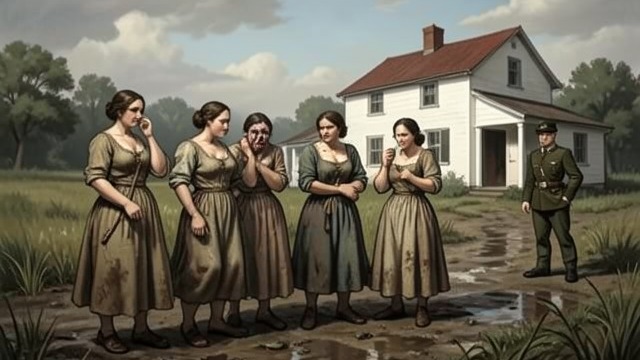
The Civilian Battlefield
Predatory Men
The refuge receives women harmed by employers, relatives, tenants, and other men with power over them. Their injuries are social as well as physical.
Institutional Response
The Pentlands use estate income to build a female-run alternative to abandonment. Charity becomes organized defense.
Military Discipline and Lydia

A Different Military Danger
Officer Misconduct
Cyrus Denny attempts to exploit Lydia Bennet while serving in the Hertfordshire Militia. His conduct reveals weakness in military discipline.
Institutional Pressure
Horseguards threatens court-martial and execution for desertion. Public authority intervenes where family authority failed.
Disabled Veterans Hired
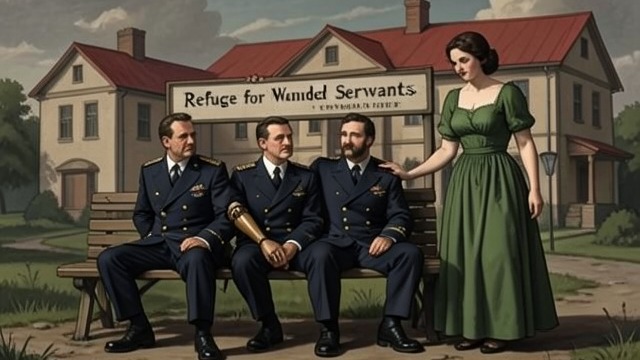
Service After Injury
Employment Problem
Elizabeth Bennet hires two former Royal Navy men who lost an arm in battle. Their injuries have made ordinary employment difficult.
A New Duty
Darcy recognizes the practice as a model for wider support. The couple extends the refuge’s ethic from abused women to wounded servants of the Crown.
A Broader Legacy

Responsibility Expanded
Beyond the Estate
The Darcys continue funding the refuge and seek ways to support injured veterans. Their charitable commitments are integrated into estate administration.
Social Principle
The story argues that status creates obligations. Those with resources must act, not merely donate or claim good intentions.
1772
1773-1812
summer 1812
autumn 1812
epilogue after 1813
